Department of Civil and Environmental Engineering · HKUST

Computer vision and point cloud-driven structural damage detection

AI, computer vision, point clouds, UAVs, UGVs, and digital twin technologies for rapid, automated structural damage inspection and performance assessment.

Computer VisionPoint CloudsStructural Damage
← Back to all projects
Computer vision and point cloud-driven structural damage detection
Post-earthquake building damage detection

Post-earthquake building damage detection

Overview

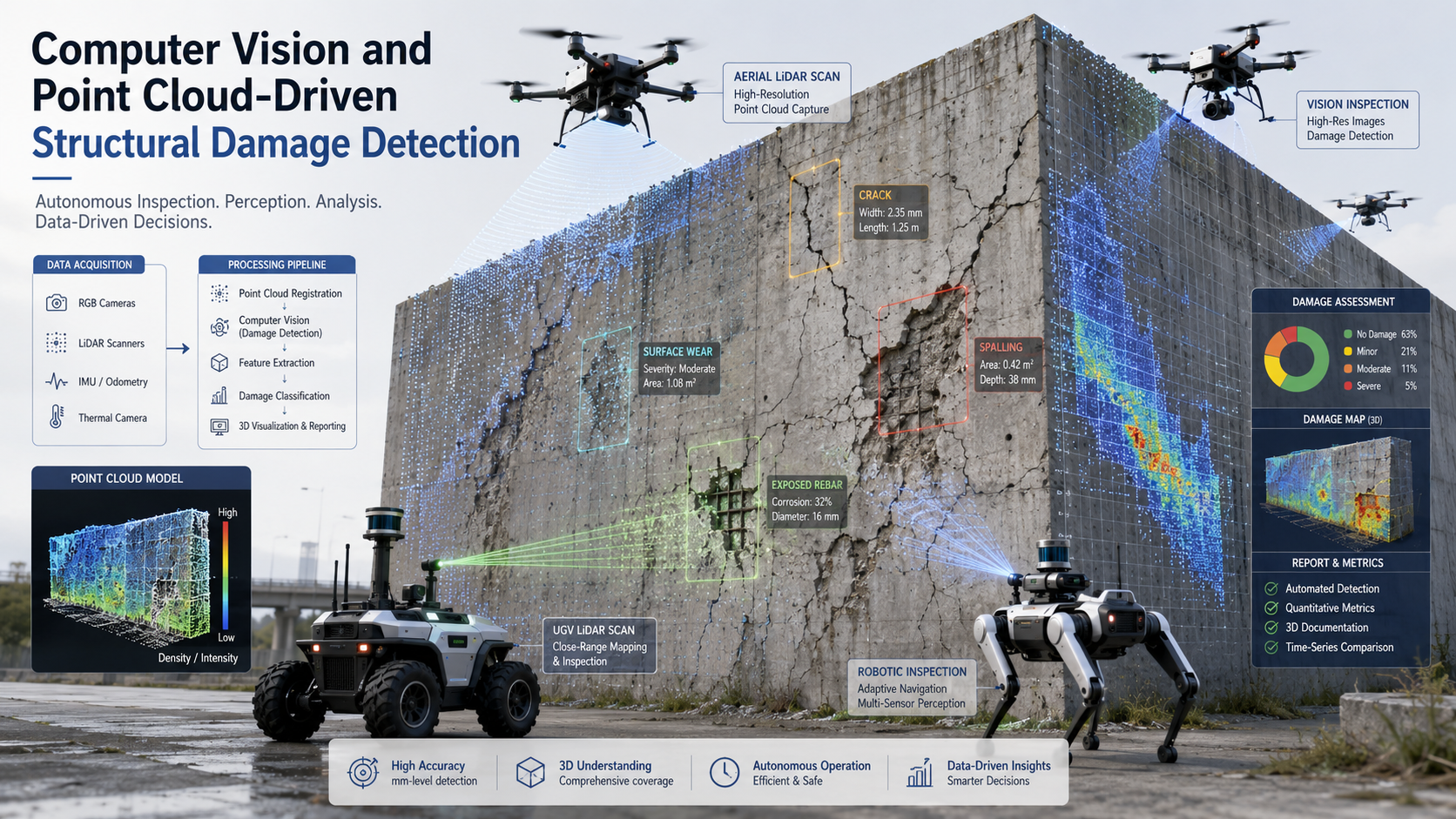
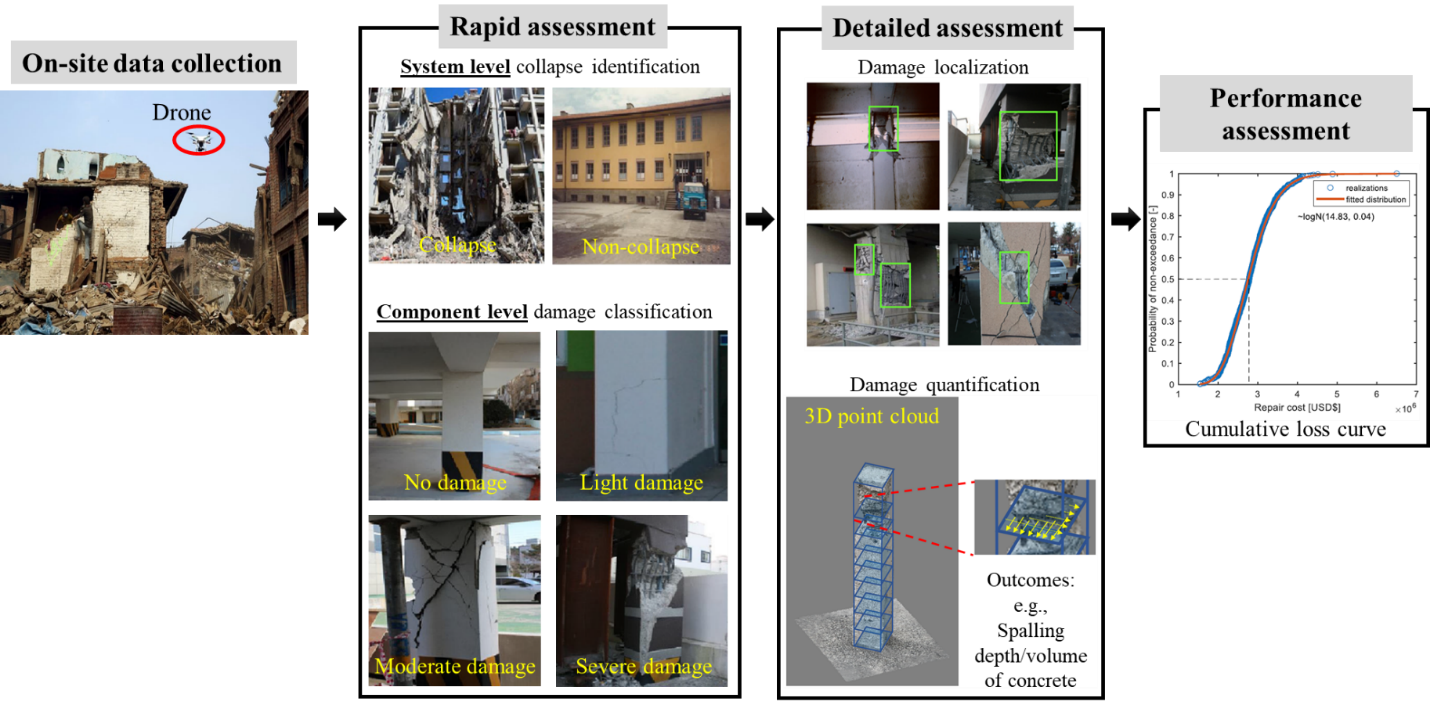
Rapid post-disaster structural damage inspection and performance evaluation are crucial for building owners and policymakers to make informed risk management decisions. Traditional manual inspection is inefficient, labor intensive, inherently biased, and heavily relies on the proper training of inspectors. To address these challenges, this research project aims to propose a generic digital twin-supported framework for structural damage condition and performance assessment, using AI, computer vision, point clouds, and robotic technologies. The framework is illustrated below.

References

  1. Pan, X., & Yang, T. Y. (2020). Postdisaster image-based damage detection and repair cost estimation of reinforced concrete buildings using dual convolutional neural networks. Computer-Aided Civil and Infrastructure Engineering, 35(5), 495-510.
Concrete and masonry damage detection

Concrete and masonry damage detection

Overview

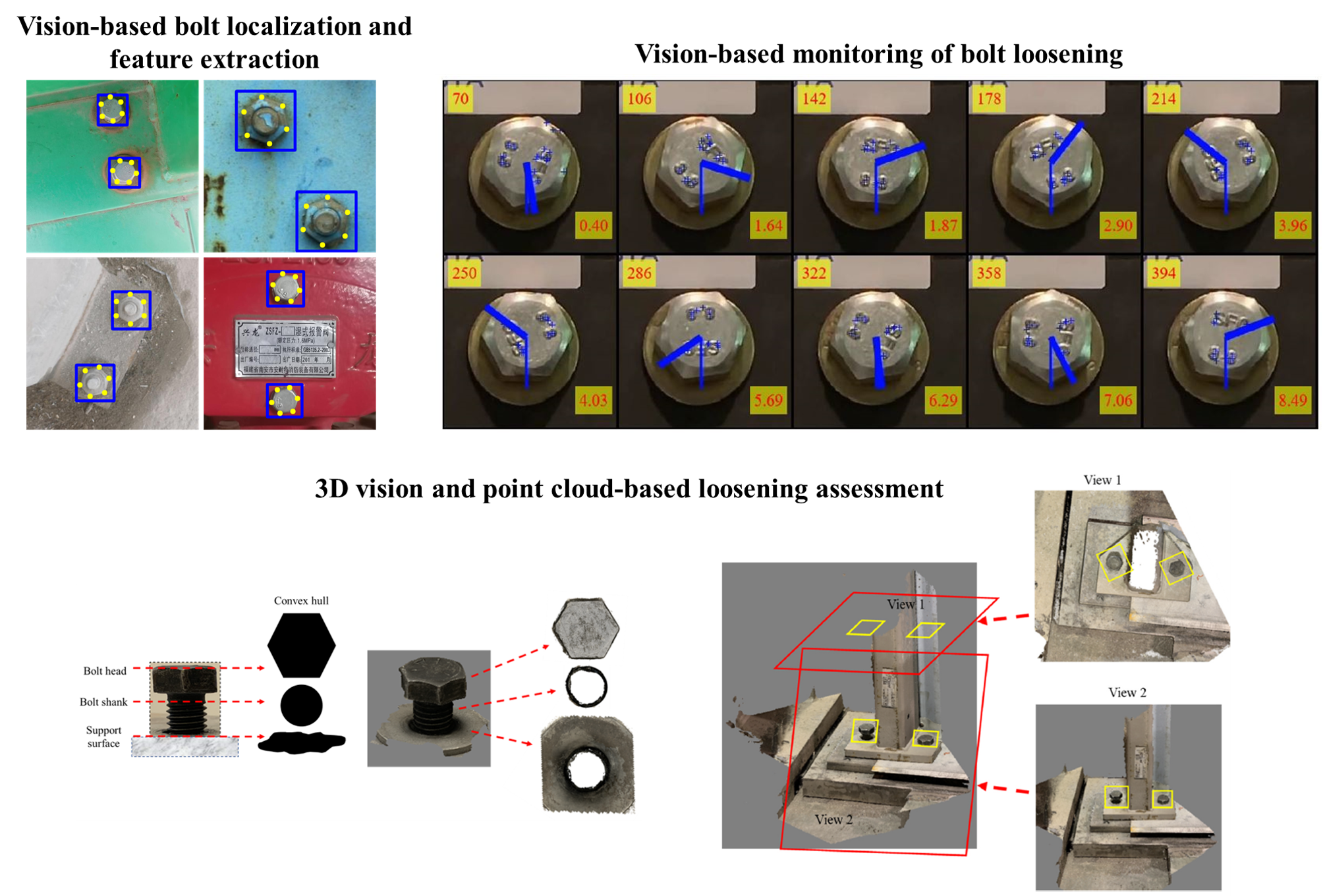
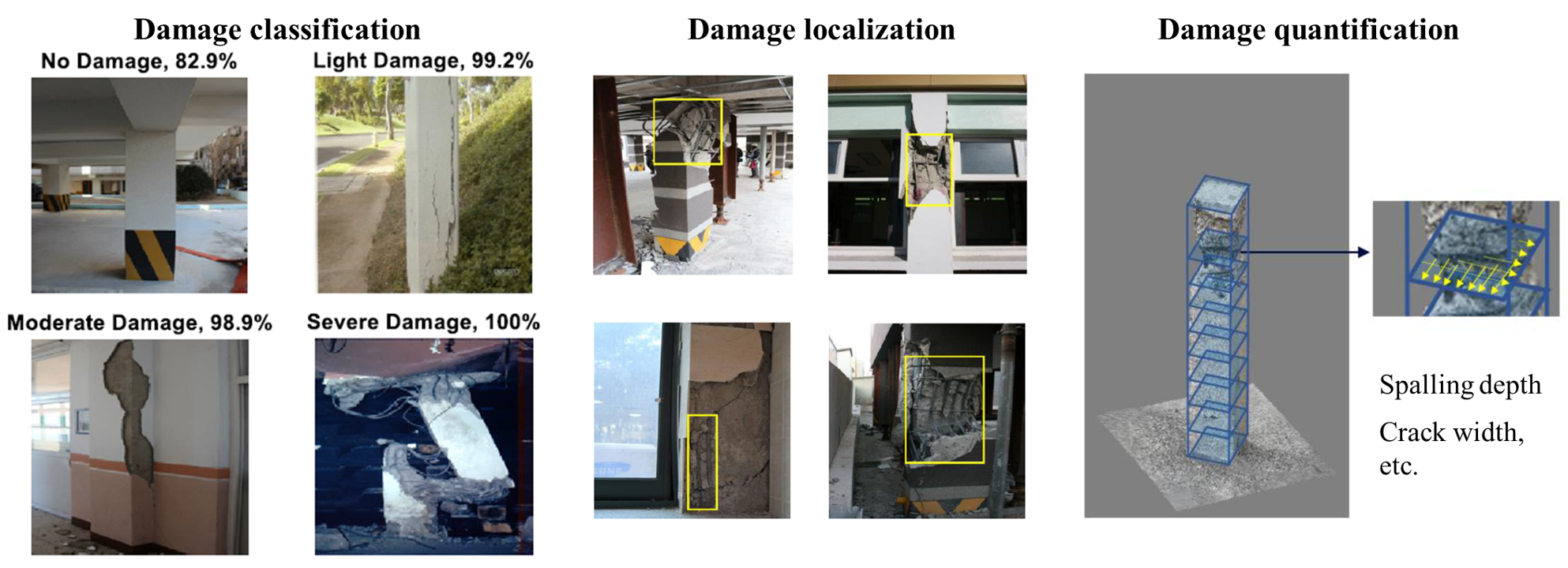
Structural concrete and masonry materials are widely used in building construction. The damage types of reinforced or unreinforced concrete and masonry structures are very similar, such as cracks, spalling, crushing, exposure, buckling, yielding of steel reinforcement, etc. This project aims to develop and apply novel deep learning, computer vision, and 3D point cloud techniques for automatic classification, localization, and quantification of these damage features.

References

  1. Tavasoli, S., Pan, X., & Yang, T. Y. (2023). Real-time autonomous indoor navigation and vision-based damage assessment of reinforced concrete structures using low-cost nano aerial vehicles. Journal of Building Engineering, 68, 106193.
  2. Faraji Zonouz, E., Pan, X., Hsu, Y., Yang T.Y. (2023). 3D vision-based structural masonry damage detection. Canadian Conference - Pacific Conference on Earthquake Engineering (CCEE-PCEE) 2023, Vancouver, British Columbia, Canada.
  3. Tavasoli, S., Pan, X., Yang, T. Y., Gazi, S., & Azimi, M. (2023). Autonomous damage assessment of structural columns using low-cost micro aerial vehicles and multi-view computer vision. Canadian Conference - Pacific Conference on Earthquake Engineering (CCEE-PCEE) 2023, Vancouver, British Columbia, Canada.
  4. Pan, X., & Yang, T. Y. (2020). Postdisaster image-based damage detection and repair cost estimation of reinforced concrete buildings using dual convolutional neural networks. Computer-Aided Civil and Infrastructure Engineering, 35(5), 495-510.
UAV-aided structural damage inspection

UAV-aided structural damage inspection

Overview

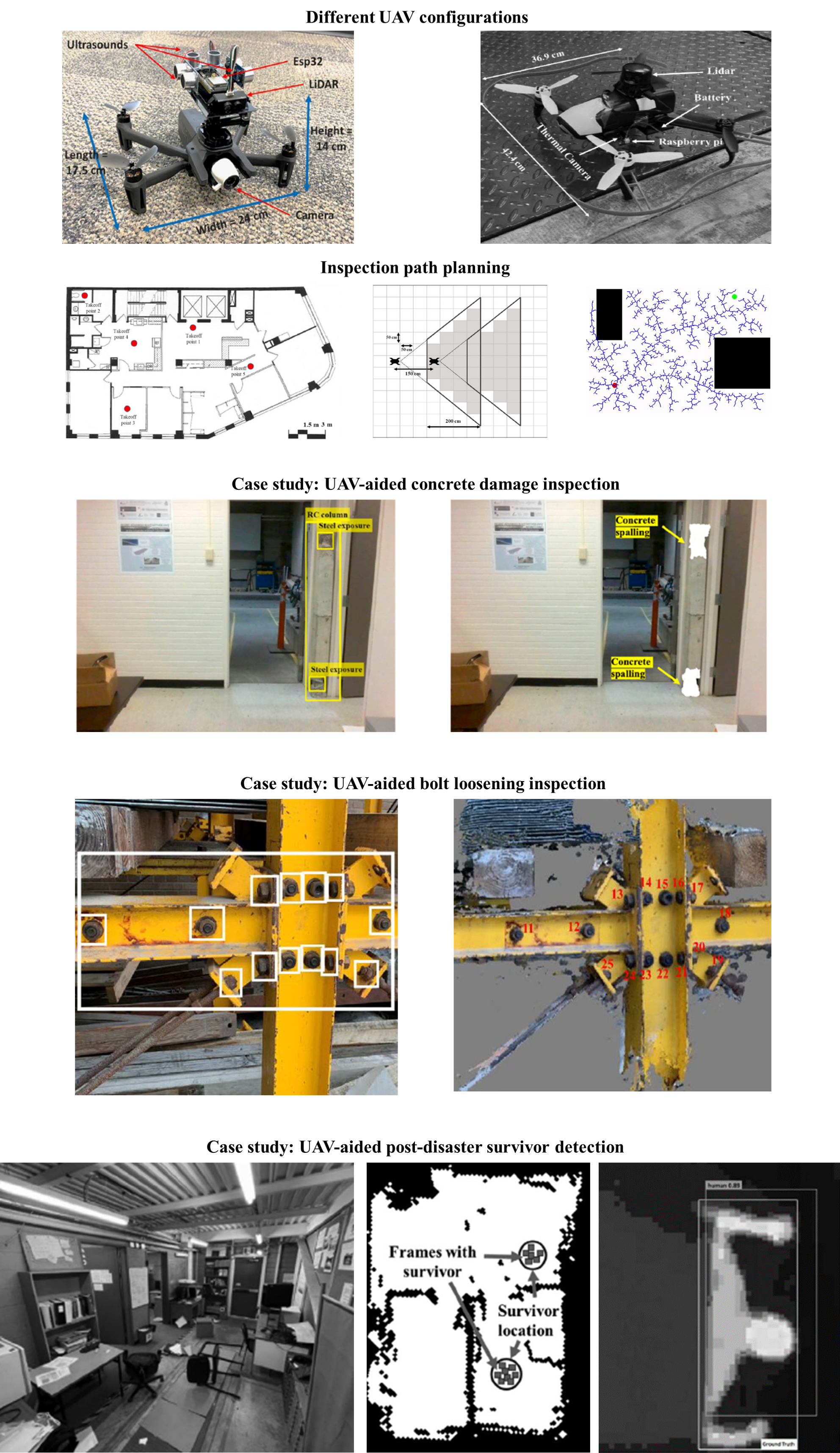
In recent years, unmanned aerial vehicles (UAVs) have been used as another efficient means of data collection in various applications such as surveillance, reconnaissance, inspection of critical facilities, intelligent agriculture, mapping, and rescuing. This research aims to develop a novel UAV-based approach for autonomous structural damage inspection, which incorporates a programmable UAV with various types of sensors, novel flight path planning algorithms, and task-specific algorithms such as structural damage detection and post-disaster survivor detection.

References

  1. Tavasoli, S., Poorghasem, S., Pan, X., Yang, T. Y., & Bao, Y. (2024). Autonomous post‐disaster indoor navigation and survivor detection using low‐cost micro aerial vehicles. Computer‐Aided Civil and Infrastructure Engineering.
  2. Tavasoli, S., Pan, X., & Yang, T. Y. (2023). Real-time autonomous indoor navigation and vision-based damage assessment of reinforced concrete structures using low-cost nano aerial vehicles. Journal of Building Engineering, 68, 106193.
  3. Pan, X., Tavasoli, S., & Yang, T. Y. (2023). Autonomous 3D vision‐based bolt loosening assessment using micro aerial vehicles. Computer‐Aided Civil and Infrastructure Engineering, 1–12.
  4. Tavasoli, S., Pan, X., Yang T. Y., Gazi, S. (2023). Autonomous damage assessment of structural columns using low-cost micro aerial vehicles and multi-view computer vision. Canadian Conference - Pacific Conference on Earthquake Engineering (CCEE-PCEE) 2023, Vancouver, British Columbia, Canada.
UGV-aided structural inspection

UGV-aided structural inspection

Overview

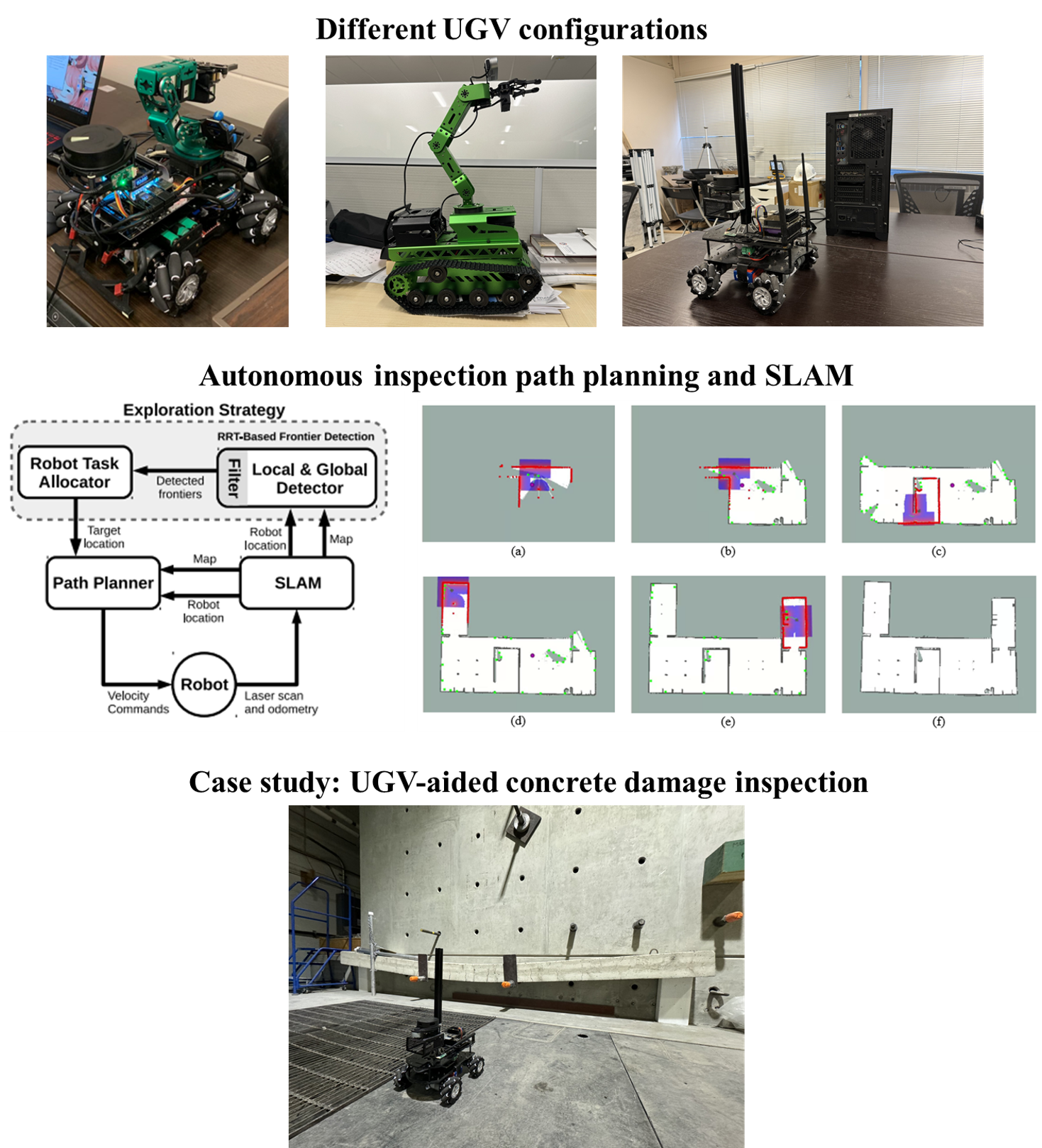
Modern unmanned ground vehicles (UGVs) play important roles in many industries. Compared to UAVs, UGVs have a much higher payload, which can house various types of sensors and manipulators with different base platforms to suit different scenarios, such as legged UGVs for buildings and construction sites, wheeled UGVs for roads and construction sites, and hybrid wheeled-legged UGVs for complex terrains. This research aims to develop and apply an autonomous UGV-aided approach for structural inspection tasks, including autonomous path planning, simultaneous localization and mapping (SLAM), and task-specific algorithms.

References

  1. Xiao, Y., Pan, X., Tavasoli, S., M. Azimi, Y. Bao, Noroozinejad Farsangi E., Yang T.Y. (2023) “Autonomous inspection and construction of civil infrastructure using robots.” Automation in Construction Toward Resilience, edited by Ehsan Noroozinejad Farsangi, Mohammad Noori, Tony T.Y. Yang, Paulo B. Lourenço, Paolo Gardoni Izuru Takewaki, Eleni Chatzi, Shaofan Li.